KEYNOTE SPEAKER I
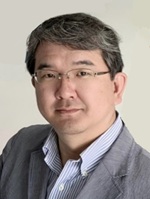
Prof. Thomas Kang, Seoul National University, South Korea
Dr. Thomas Kang, P.E., is a Professor at Seoul National University (SNU). He earned his Ph.D. from the University of California, Los Angeles (UCLA) and his B.S. from SNU. Dr. Kang is a Fellow of the American Concrete Institute (ACI), the Post-Tensioning Institute (PTI), and the Korean Academy of Science and Technology (KAST), and is a member of the National Academy of Engineering of Korea (NAEK).
He has received numerous prestigious awards, including the T.Y. Lin Award from the American Society of Civil Engineers (ASCE) in 2025, the Kenneth B. Bondy Award for Most Meritorious Technical Paper from PTI (twice, in 2012 and 2023), the Wason Medal for Most Meritorious Paper from ACI in 2009, and the Martin P. Korn Award from the Precast/Prestressed Concrete Institute (PCI) in 2023.
Dr. Kang currently serves as Editor-in-Chief of the Journal of Wind & Structures and as Associate Editor of the PTI Journal. His research focuses on the design and behavior of concrete structures and structures incorporating recycled plastics, as well as dynamic effects on structures, including wind, seismic, shock, and fire.
KEYNOTE SPEAKER II
 Kim.png)
Prof. Young (Youngchul) Kim, Korea Advanced Institute of Science & Technology, South Korea
Prof. Young (Youngchul) KIM, Ph.D. is an urban designer, licensed architect, researcher and educator, currently serving as an associate professor of urban design at KAIST (Korea Advanced Institute of Science and Technology) in South Korea. He teaches theory and design in architecture and urbanism. His current research interests include investigating planning and design strategies within the context of smart cities and climate change and employing deep learning and artificial intelligence approaches for urban analytics to capturing urban invisible characteristics. His urban research and urban design practice both explore roles of built environments in human being's daily challenges to continuously sustain their urban life. He leads the KAIST Smart City Research Center and KAIST Urban Design Lab.
KEYNOTE SPEAKER III
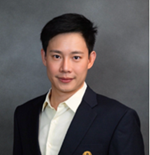
Assoc. Prof. Lapyote Prasittisopin, Chulalongkorn University, Thailand
Dr. Lapyote Prasittisopin is Director of Center of Excellent on Green Tech in Architecture, Chulalongkorn University and Associate Professor in Department of Materials Science, Faculty of Science, Chulalongkorn University. He received his MS degree in Material Science (Polymer) and his PhD in Civil Engineering (Structural Material) from Oregon State University, USA as well as B.Eng. Chemical Engineering from Chulalongkorn University and LL. B. Law from Sukhothai Thammathirat University. He was former a researcher at Siam Cement Group, Thailand and O.H. Hinsdale Wave Research Laboratory, USA to launch several structural products. He has published 14 patents and more than 100 academic articles. His research interests include Architecture Engineering, Digital Construction, Building Materials, Sustainability, and Circular Design.
KEYNOTE SPEAKER IV
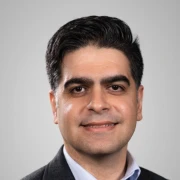
Assoc. Prof. Abdollah Malekjafarian, University College Dublin, Ireland
Dr. Abdollah Malekjafarian is an Associate Professor in the School of Civil Engineering at University College Dublin, where he leads the Structural Dynamics and Assessment Laboratory (SDA-Lab). He is currently the Head of Graduate Studies in the School of Civil Engineering. His research expertise spans structural dynamics, random vibrations, and data-driven modelling, with a strong focus on machine learning and statistical learning methods for monitoring, assessment, and decision support in complex engineering systems. His research addresses key challenges in structural health monitoring, anomaly detection, and feature engineering under operational and environmental variability. He develops and applies physics-informed and data-driven approaches across transport infrastructure and renewable energy systems, including offshore wind and other marine structures, with an emphasis on robustness, interpretability, and real-world deployment. His recent work places strong emphasis on translating advanced research into practical tools for industry and policy. He has led nationally funded initiatives focused on offshore renewable energy development, including evidence-based guidance on design flexibility, regulatory frameworks, and environmental impact considerations to support planning, consent, and decision-making in real-world projects. He also develops applied decision-support methodologies for the full lifecycle management of wind energy assets, addressing lifetime extension and condition-based maintenance, to provide actionable frameworks for asset owners, policymakers, and regulators. Dr. Malekjafarian has secured over €3 million in competitive research funding and collaborates extensively with academic, industrial, and governmental partners. He serves on the editorial boards of several international journals, including Engineering Applications of Artificial Intelligence, Shock and Vibrations, Discover Energy, and the Journal of Vibroengineering. He is a member of the Young Academy of Ireland and serves on the Science Communication Committee of the European Academy of Wind Energy.
Speech Title: Data-Driven Structural Health Monitoring in Civil Infrastructure: From Feature Selection to Transferable Intelligence
Abstract: Structural Health Monitoring (SHM) of civil infrastructure increasingly relies on machine learning (ML) for automated, scalable damage detection. However, challenges remain in feature engineering, robustness to environmental and operational variability, and generalisation across structures. This talk presents recent advances in ML-based SHM through case studies on bridges, railway tracks, and wind turbines, structured along a progression of learning paradigms. It begins with supervised learning, highlighting how optimal feature selection improves classification accuracy and reduces redundancy, followed by unsupervised approaches for label-scarce scenarios. Using anomaly detection frameworks, the role of robust, physically informed feature selection is emphasised, particularly in mitigating environmental and operational effects. Applications in railway monitoring demonstrate how onboard sensing and data-driven methods enable scalable infrastructure assessment. The final part addresses generalisation through transfer learning and domain adaptation, enabling models trained in one setting to perform reliably in new conditions. Case studies illustrate how domain-invariant feature learning and knowledge transfer reduce reliance on labelled data while improving robustness across systems. Overall, the talk highlights the integration of data-driven techniques with structural understanding, showing how physics-informed feature engineering can enhance the reliability, interpretability, and scalability of ML-based SHM. Overall, the talk highlights a unifying theme: the integration of data-driven methods with structural understanding. By embedding physics-informed insights into feature engineering and learning frameworks, it is possible to improve robustness, interpretability, and generalisability of ML-based SHM systems.